Category Archives: FA21-Grp-04

Topic: Superstitions/Customs surrounding tests

Introduction

Many of our superstitions relate to daily routines – what food we eat, what clothes we wear, and what actions or activities do we partake in (e.g. stepping out the door with your right foot on the day of an exam). This is likely due to the fact that our everyday routines are subject to change and are within our control, unlike the result of our actions (exam performance). Also, as expected, many of our superstitions exhibited elements of both homeopathic and contagious magic. Both terms were defined by Sir James George Frazer when he coined the term “sympathetic magic.” Homeopathic magic draws on the “Law of Similarity” of “like produces like” while contagious magic draws on the “Law of Contact” which states that there is a connection between a severed part and the original body that it was a part of. A superstition that we collected that draws on contagious magic is the Turkish tradition of swallowing a grain of rice draws on notions of contagious magic; the grain of rice makes “contact” with the prayer spoken by the parent, and this prayer is carried into the student when it is consumed. An instance of homeopathic magic would be avoiding wearing the color yellow in Spain because it is associated with the devil. The color yellow might not have directly come into contact with the devil himself, it is still associated with dark forces and would hence bring bad luck. While these two examples illustrate separate instances in which homeopathic and contagious magic are manifested in superstitions, many other items that were collected showed a combination of the two types of magic. 

In addition, we observed a few repeated pieces of collected folklore. One example of this was the superstition of eating kitkats before exams to channel good luck. This led us to conclude and see with our own eyes that many cultures and communities have similar superstitions, and that some of our superstitions are used by many different folk groups all over the world. Perhaps its possible that many of our collected superstitions originate from similar ancestral folk groups, or that the internet and other forms of communication have led to increased cultural diffusion of folklore around the world. 

Thank you for taking the time to review our collected folklore!

Note Cards Under the Pillow – American (Caroline)

Title: Note Cards Under the Pillow

General Information about item:

  • Customary Folklore, Superstition
  • Language: English
  • Country of Origin: United States
  • Informant: LB
  • Date Collected: 10-26-21

Informant Data:

LB is a (’24) sophomore at Dartmouth College. She is majoring in economics and is a member of the Dartmouth Investment and Philanthropy Program. She is from San Diego, California and has lived there her whole life. She attended The Bishops School for high school.  

Contextual Data:

  • Cultural Context: LB’s family is very academically motivated, and both her parents have studied at amazing institutions. Her mother attended Stanford University for undergraduate school and later Georgetown Law School. Her father attended Yale University for undergraduate school and later Harvard Law School. Growing up her parents always expected very good grades and therefore LB studied very hard just like her parents had done.     
  • Social Context: LB first learned this superstition from her dad when she was younger. One night when she was struggling to study when she was around 8 years old, her dad told her to write out notecards with the material she needed to know and before going to bed that night to put them under her pillow. By putting the notecards under the pillow right before going to bed, it would allow her brain to absorb the information as she slept. Once LB’s younger brothers got old enough, her dad also shared this superstition with them, and they have since started to do it. LB explained that many of her friends also do it now after she told them about the superstition. This superstition was collected in an in-person interview.

Item:

Prior to tests, LB would sleep with her notecards under her pillow so that her brain would “absorb the information in her sleep”. 

Transcript:

My pre-test superstition is that the night before a test, I sleep with my notecards under my pillow so that my brain will absorb the information as I sleep. By doing this, I hope that I will know all the material on my notecards so that I can get a good grade on the test. My dad told me that he and all his siblings did this when they were going through school, so my siblings and I started doing it when we were younger, and we still continue to do it. Even some of my closest friends started putting their notecards under their pillows before tests after I told them about the superstition”.

Informant’s Comments:

  • Despite there being other more efficient ways to study, I still write out notecards so that I can put them under my pillow. I plan on doing this the rest of college and to pass it on to my children”.

Collector’s Comments:

  • I found it interesting that LB continues to do this despite there being easier and more time efficient ways to study. It is evident that LB feels this superstition is important in her success in school because she continues to do it and plans on passing it to her children.

Collector’s Name: Caroline

Tags/Keywords: 

  • Superstition
  • American
  • Female
  • Dartmouth
  • Note Cards

Rabbit, Rabbit, Rabbit- England (Caroline)

Title: “Rabbit, Rabbit, Rabbit”

General Information about item:

  • Customary Folklore, Superstition
  • Language: English
  • Country of Origin: England
  • Informant: PA
  • Date Collected: 10-25-2021

Informant Data:

PA is a (’24) sophomore at Dartmouth College. She is a history major and plans on attending law school. PA’s parents are from the United States but moved to England for their careers. PA was born in England and lived there for most of her young childhood. When she was 10, they moved to Hillsborough, New Jersey and this is where she attended middle and high school.  

Contextual Data:

  • Cultural Context: It is a tradition in England to say “Rabbit, Rabbit, Rabbit” on the first day of the month to ensure that you have good luck the rest of the month. PA explained that her family did this while they lived in England and as children, PA and her brother always wanted to be the first to say it in the month. In addition, rabbits in England are associated with good luck and thought to bring good luck.
  • Social Context: PA first learned this superstition from her mom when she was younger and living in England. As PA began to worry and study more for tests, her mom told her and her brother to repeat rabbit three times right before the test for good luck. So, prior to any exam or test, PA recites rabbit three times to herself which she has been doing since she was around 8 years old. This was collected in an in-person interview.  

Item:

Saying “Rabbit, Rabbit, Rabbit” before a test or exam, will give the student good luck on the exam and result in their desired grade.

Transcript:

“My pre-test superstition is if I say “Rabbit, Rabbit, Rabbit” before a test or exam, I will have good luck on the exam which will translate into me getting a good grade. I first learned this superstition from my mom when we lived in England when I was younger. In England, on the first day of the month, there is a tradition to say “Rabbit, Rabbit, Rabbit” to ensure that you have good luck for the rest of the month. Rabbits are also just associated with good luck, so my parents started saying it to my brother and I when we were younger as a way to wish good luck. As I got older and started to worry and study more for tests, my parents told my brother and I to repeat rabbit three times right before the test for good luck. Ever since we learned this superstition when I was around 8 years old, we continued to do it. My brother and I still say this before big tests and exams today.”

Informant’s Comments:

  • My brother and I have been saying “Rabbit, Rabbit, Rabbit” since we 8 years old and since we have found success in school, I don’t think that we will ever stop saying it.”
  • This superstition also reminds me about my childhood in England which I have so many great memories”.

Collector’s Comments:

  • I found it interesting how PA and her family have continued to use this superstition despite moving to the United States. I found it surprising that rabbits were associated with good luck in England but in further research it became very evident of this established relationship. This superstition follows the magic superstition structure which is: if you do A then B. If the student says “Rabbit, Rabbit, Rabbit”, then they will have good luck on their exam.

Collector’s Name: Caroline

Tags/Keywords:

  • Superstition
  • British
  • Female
  • Dartmouth
  • Rabbit

Eating Maple Candies While Studying- Canada (Caroline)

Title: Eating Maple Candies while Studying

General Information about item:

  • Customary, Superstition
  • Language: English
  • Country of Origin: Canada
  • Informant: BB
  • Date Collected: 10-27-2021

Informant Data:

BB is a (’24) sophomore at Dartmouth College. She is pursuing a biology major. She is from Vancouver, Canada. She has lived in Vancouver her whole life with her family and extended family. In addition to her academics, BB is a student athlete on the Dartmouth Field Hockey program. She is a member of the Canadian Junior National team in which she won the gold medal at Junior Pan-American Games this past summer.

Contextual Data:

  • Cultural Context: Maples are very important to Canadian culture. Maples contribute to their wood products, sustain the maple sugar industry, and vastly populate the landscape. In addition, the maple leaf is at the center of the National Flag of Canada making it the most prominent Canadian symbol. These maple candies are in the shape of the Canadian Maple leaf and are products of the maple sugar industry.
  • Social Context: BB learned this superstition from her parents when she was younger. BB’s parents used to give these maple candies to BB and her brother when they were studying so that the information would stick in their heads so that they could remember it on the day of the test. BB said her mom always had a hidden spot with these candies so whenever she saw them studying, her parents always had them to give to her and her brother. BB said that her grandmother used to do the same thing for her mom and her siblings. Her mom, aunts, and uncles have now passed this superstition on to their children. Despite being at college, BB still does this superstition whenever she is studying for a test because her mom always sends her them in a care package each term. This superstition was collected in an in-person interview.

Item:

When studying for a test, BB and her family will eat a maple candy while they study so that the material sticks with them. The material will stick in their mind because of the sticky nature of the candy. By doing this, they will know the information better therefore they can recall it and perform well on the test.

Transcript:

My pre-test superstition is that when I am studying for a test or exam, I eat maple candies so that the information will stick with me. When I was younger, my parents used to always give my brother and I maple candies when we were studying so that the information would stick in our heads so that we could remember it on the test. I learned this superstition from my mom who learned it and did it during her childhood. It was taught to my mom and her siblings by my grandmother, and they have since passed it on to my cousins and I. Ever since we learned it when we were in elementary school, my brother and I have continued to eat the maple candies while we study throughout high school and now college”.

Informant’s Comments:

  • “My mom usually sends me these in a care package when I’m at school and it makes me feel right at home as well as helping me study”.

Collector’s Comments:

  • I found this superstition interesting because of the connection with the maple leaf. I’m happy that BB is able to continue this superstition even though she is away from home at college.

Collector’s Name: Caroline

Tags/Keywords: 

  • Superstition
  • Canadian
  • Female
  • Studying
  • Maple Candy

Sharpened Pencils (Singapore) – Kevin King

General Information About Item:

  • Customary Folklore: Pre-test custom, superstition
  • Language: English
  • Country of Origin: Singaporee
  • Informant: EF
  • Date Collected: 11/01/21

Informant Data: EF is a sophomore (‘24) at Dartmouth College from Singapore. She was born in Berkeley, California, before she and her parents moved for her dad’s job. She and her younger sister attended Singapore American School. She noted that her family is very superstitious in their everyday lives. 

Contextual Data:

  • Cultural Context: In Singapore, academics are stressed greatly. It is important to keep a fresh mind and be prepared for major exams as much as possible. This applies to everything, which means the items they use because they are essentially extensions of one’s body.
  • Social Context: The informant collected this piece of folklore when she was in the fourth grade at Singapore American School. Her teacher that year, who was native to Singapore, would always get a box of Dixon Ticonderoga #2 pencils before tests and hand out a new one to each student beforehand. Once the pencils were passed out, her teacher would have everyone freshly sharpen them to make sure that they were in perfect condition. I collected this item in an in-person interview. 

She would use this specific pencil, and only this one, until the next test because she enjoyed the sense of excitement she would get on test days when she received a new, fresh one. This would always put her in a good mood, which she believes was a huge advantage because it helped her ignore her other worries and solely focus on the test material. When she entered fifth grade, her teacher didn’t do the same tradition, so she decided to do it for herself from there on out. At the beginning of each school year going forward, and currently in college as well, she would buy a huge pack of these pencils. Then, on each test day she would take a new one out, sharpen it, and proceed to take the test. 

Item: In Singaporean culture, it is believed that if you sharpen your pencil right before you take an exam or test, the freshness of the pencil will result in a fresh mind, allowing one to think clearly and do well. 

Associated File

13924 - Dixon® Ticonderoga - Pencil - #2, 24/Box, Yellow Clear - PK of 24

Transcript:

  • “Before I take any form of test or exam, I always use a sharpened Dixon Ticonderoga #2 pencil. I started doing it because I thought the freshness of a new pencil would result in a fresh mind while I took exams, allowing me to think clearly and do well.” 

Informant’s Comments:

  • EF continues this superstition in all of her exams in college. Over the years, she has gotten many of her friends to follow suit as they have found that it helps enact a similar effect of clear-mindedness when they take exams.

Collector’s Comments:

  • I believe this pre-test superstition carries a great deal of significance for EF because, not only does it clear her mind for exams, but it also is a routine that she’s been comfortable with since she was young. Many people I’ve come across have specific routines that they follow before exams or other high-pressure situations such as performances or sports games. For many, superstitions serve to calm one’s mind because it helps them believe that they have control over outcomes. 

Collector’s Name: Kevin King

Tags/Keywords:

  • Superstitions 
  • Singapore
  • Pencil 

Avoiding Wearing Yellow During Exams- Spain (Caroline)

Title: Avoiding Wearing Yellow during Exams

General Information about item:

  • Customary Folklore, Superstition
  • Language: English
  • Country of Origin: Spain
  • Informant: CE
  • Date Collected: 10-26-2021

Informant Data:

CE is a freshman (‘25) at Dartmouth College. She grew up primarily in the Netherlands but spent three years living in Spain. Her father is originally from Spain and still splits his time between Spain and the Netherlands. She mentioned that she is fairly superstitious especially when it comes to exams. 

Contextual Data:

  • Cultural Context: This superstition comes from Spanish culture. The color yellow is believed to be associated with sulfur and the Devil; therefore, it is said to bring bad luck to certain situations such as a test or interview.
  • Social Context: CE first learned this from her dad when she was living in Spain when she was 10 years old. Her dad who grew up in Madrid learned this superstition during his childhood, and always avoided wearing yellow before tests and interviews. He then passed this onto his two daughters who also avoid wearing yellow during tests. After learning the superstition from her dad, CE noticed that her other classmates also avoided wearing yellow on days they had tests. CE and her friends later acknowledged that they had all learned this superstition from their parents at some point during their childhood. This superstition was collected during an in-person interview. 

Item:

In Spain, students avoid wearing any yellow clothing when they are taking an exam. The color yellow is believed to be associated with sulfur and the Devil; therefore, it is said to bring bad luck to certain situations such as a test or interview. To avoid this bad luck and getting a bad grade on the exam, students intentionally do not wear any yellow clothing for exams.

Transcript:

My pre-test superstition is that I never wear any yellow clothing on days that I have a test because if I do it will bring bad luck and I will get a bad grade on the test. I do this for any test or exam. Yellow is associated with sulfur and the Devil so I was told that it would bring bad luck to certain situations such as a test or interview. So in order to avoid this bad luck, I avoid wearing yellow. I learned this from my dad when we were living in Spain when I was 10 years old. My dad is from Spain and learned this superstition during his childhood. He always avoided yellow before tests and still avoids wearing yellow during interviews or important meetings. After learning this superstition, I noticed that my friends also didn’t wear yellow for the test. I later talked to them about it and found that they shared this superstition and had learned it from their parents and grandparents. Even after moving back to the Netherlands, my family and I still avoid wearing yellow on days we have tests and interviews.”

Informant’s Comments:

  • I really don’t own very much yellow because I know that I will never wear it on days that I have tests.”
  • “Even after moving back to the Netherlands, my family and I still avoid wearing yellow on days we have tests and interviews.”
  • “I plan on telling my kids about this superstition.”

Collector’s Comments:

  • This follows the magic superstition structure which is “If you do A then B”. The superstition goes as follows: if you wear yellow clothing during an exam, then you will have bad luck and do poorly on the exam.
  • I found it really interesting how CE continued to do this superstition after moving back to the Netherlands and even more interesting how she continues to avoid wearing yellow at exams at Dartmouth.

Collector’s Name: Caroline

Tags/Keywords:

  • Superstition
  • Spanish
  • Female
  • Student
  • Yellow clothing

Not Washing Hair (Korea) – Kevin King

General Information About Item:

  • Customary Folklore: Pre-test custom, superstition
  • Language: English
  • Country of Origin: Korea
  • Informant: LL
  • Date Collected: 10/28/21

Informant Data: LL is a sophomore (‘24) at Dartmouth College born and raised in Los Angeles, California. She attended Harvard-Westlake School, one of the top-ranked high schools in the country. She mentioned that she and her Korean family are fairly superstitious. 

Contextual Data:

  • Cultural Context: In Korea, New Years Day is a big celebration for people and offers them a chance at a fresh start. A major tradition that people do is to not wash their hair, for they believe it will wash away their good luck. This ritual is often practiced by students on testing days. 
  • Social Context: LL’s mother passed down this superstition to her as soon as she entered middle school. It is a tradition that LL used throughout middle and high school. I collected this superstition from LL during an in-person interview. Her parents were always very strict with her in her studies, and always wanted her to be the best in the class and score highly on tests. Thus, they were adamant that she followed this superstition as a child.  

Item: The night before a student takes an exam, they don’t wash their hair with shampoo because it is believed that this act will wash away (1) good luck and (2) all the information that the students studied. 

Associated File

Shampoo debate: Are you washing your hair enough? | CTV News

Transcript:

  • “Before I went to bed the nights before I would have a test, my mom would come into my room to make sure that my hair was dry.”

Informant’s Comments:

  • The informant noted that she thought at times her parents made her follow this superstition to too much of an extreme. Now, she doesn’t follow it as closely. 

Collector’s Comments:

  • I could relate with this superstition because during Chinese New Years, my mother would tell my sister not to wash her hair because it would wash away good luck. This isn’t really something I would follow, however. 

Collector’s Name: Kevin King

Tags/Keywords:

  • Superstition 
  • Korea
  • Hair

Eating Kit Kats (Japan) – Kevin King

General Information About Item:

  • Customary Folklore: Pre-test custom, superstition
  • Language: English
  • Country of Origin: Japan
  • Informant: EK
  • Date Collected: 11/01/21

Informant Data: EK was born in Palo Alto, California, in 2002. He was raised by his parents in Burlingame, just 20 minutes north of Palo Alto, and lived there his entire life. His mother is Japanese and enjoyed passing down family traditions and superstitions to EK when he was younger. 

Contextual Data:

  • Cultural Context:  In Japanese, the name of the popular candy, Kit Kat, is pronounced “kitto katto” which sounds similar to the phrase “kitto katsu” which translates to “you will surely win.” This candy is very popular in Japan and is sold in a variety of flavors. 
  • Social Context: EK collected this pre-testing superstition from his mother when he was in elementary school and I witnessed him performing this superstition when I met him in high school. He told me that it was a very popular Japanese pre-testing superstition.. When he was younger, EK would always get nervous before taking exams. It wasn’t that he didn’t do well on them, but instead just that he got really anxious beforehand. In order to calm his nerves, his mom would pack a Kit Kat candy in his lunch bag on days where he had assessments and told him to eat one before he took tests. He later noticed that his peers who were also Japanese would also come to tests with a Kit Kat or two in hand. When the informant asked his classmates why, they also stated that eating one prior to a test brings one good luck.

Item: In Japanese culture, eating a Kit Kat before an important test brings one good luck since the candy’s pronunciation is similar to a Japanese phrase that can be translated to “you will surely win.”

Associated File
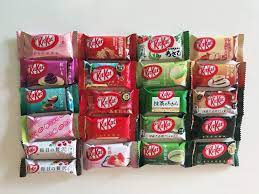
Amazon.com : Japanese Kit Kat Mini Bar 21 pcs , ALL DIFFERENT FLAVORS  Assortments (original green tea set) : Grocery & Gourmet Food

Transcript:

  • “I always have a Kit Kat with me on a test day. If I don’t have one, I feel weird and almost never do well on my test.”

Informant’s Comments:

  • The informant strictly follows this superstition and has told many peers about it, influencing them to do the same. 

Collector’s Comments:

  • This was one of the more interesting ones I heard about. I thought that the phonetic relation between the item and the reasoning behind it was a little far-fetched, so I wouldn’t personally follow this superstition myself.

Collector’s Name: Kevin King

Tags/Keywords:

  • Superstition 
  • Japan 
  • Kit Kat

Reciting Three Hail Mary’s (USA) – Kevin King

General Information About Item:

  • Customary Folklore: Pre-test custom, superstition
  • Language: English
  • Country of Origin: USA
  • Informant: KH
  • Date Collected: 10/26/21

Informant Data: KH is a middle school science teacher at St. Raymond’s Elementary School in Menlo Park, California. She was born in 1960 to a Catholic family and went to UCLA for college. She and her husband settled their family down in Menlo Park, just one town north of Palo Alto, after she finished graduate school at Stanford University. She has three children, all of whom have graduated from college. 

Contextual Data:

  • Cultural Context: In Christianity, reciting a Hail Mary is a way to request purity from God and gain other virtues. It is most often recited in the morning and before going to bed. 
  • Social Context: KH’s parents were devout Catholics all throughout her childhood. They never missed Sunday mass, and she attended Catholic schools until she went to college. Her mother was adamant that she recited three Hail Marys every morning and night. KH knew that the purity one requests from God by reciting these three Hail Marys also applies to the purity of one’s mind and decided to begin performing this ritual prior to her exams. KH became a teacher at St. Raymond’s School in Menlo Park, CA and ever since, she asks her students to do the same before each of their tests. I collected this item when I attended St. Raymond’s in middle school and had KH as my science teacher. Before our first test in the sixth grade, she told us the backstory of this superstition.

Item: Before taking a test, a student recites three Hail Mary’s in order to have a fruitful testing experience. 

Associated File

Apparitions of the Blessed Virgin Mary - dummies

Transcript:

  • “After reciting three Hail Marys, you’ll all not only feel more prepared to take your tests, but also in a better position to do well.”

Informant’s Comments:

  • It was clear that the informant was keen on following this superstition. There was not a test that I took in her class where the students did not recite three Hail Marys prior to taking it.  

Collector’s Comments:

  • This was a superstition I witnessed and performed for myself. I understand how it came about and especially given that I attended a Catholic school, it made a lot of sense. 

Collector’s Name: Kevin King

Tags/Keywords:

  • Superstition 
  • Christianity 
  • Hail Mary
  • United States