Monthly Archives: June 2019

Lila McKenna

Title: Lila McKenna

General Information about Item:

  • Pre-Performance Ritual – American
  • Lila McKenna
  • Student, Decibelles Acapella Group
  • English
  • Cleveland, Ohio
  • May 24, 2019


Text:

This pre-performance ritual is a “Shake Out” performed by all members of the Decibelles before a performance. During the ritual, all of the members shake out their body parts. While the members are shaking their body parts, the president is telling them how prepared they are and how well they are going to do during the performance.


Context: The Dartmouth Decibelles Acapella group was formed in 1974, making it the oldest female acapella group on campus. Lila McKenna has been a part of the Decibelles since 2016. She explains that she has participated in “Shake Out” since her freshman year, though her role within the group has shifted. When she began, she derived confidence from the ritual, but now she feels like she uses the ritual to instill confidence in those around her.


Meaning and Interpretation (Informant): This ritual ensures that the group performs as a unified whole. Lila talked about how they all lead crazy lives, and if they just showed up and started performing, it wouldn’t go well. This pre-performance ritual ensures that they are relaxed, calm, and united, allowing them to optimize their performance.


Meaning and Interpretation (Collector): This ritual represents a transition state in van Gessep’s Rite of Passage. They are leaving the mindset of their crazy, stressful lives and entering a calmer state that can focus not on external stressors but their music. In this state of focus and relaxation, Lila explains how their performance is optimized. Thus, this ritual helps them transition into the performance mindset and incorporate into their role in the group as a singer. The fact that this ritual takes place directly before the performance is important because this is the exact timing when the transition must take place so that they are fully incorporated into their role by the time the show starts.

As for the ritual itself, I believe the fact that the singers are loosening up their bodies in the hopes of having a more laid back, loose mindset before the performance begins reflects Frazer’s Law of Similarity. The players are loosening their bodies up hoping that this looseness will be mirrored in their mindset, which will allow them to have an optimal performance where they are calm and confident.

Collector’s Name: Maddy Schoenberger 

Tags/Keywords:

  • Arts
  • Acappella
  • Pre-Performance Rituals


Lindsey Frumer

Title: Lindsey Frumer

General Information about Item:

  • Pre-Performance Ritual – American
  • Lindsey Frumer
  • Student, Varsity Lacrosse Team
  • English
  • Bryn Mawr, Pennsylvania
  • May 23, 2019


Text:

This pre-performance folklore is a clapping circle. The team forms in a circle, and the role of leading the rate of clapping is passed down throughout the generations of lacrosse players. The leader leads the increase of the rate of clapping and the team follows along. Ultimately, the rate increases to a very quick rate, and then everyone joins in the middle to cheer, again led by the same leader. Then, they cheer and come into the circle, say “Go Green,” and head out onto the field.


Context:

The Dartmouth Lacrosse Team is a varsity sports team. Lindsey is a senior on the team and has been participating in this pre-performance folklore since her freshman year (2015-2019), and she was bequested the leadership role of both traditions her sophomore year (2017). Lindsey notes that she does not know the origin of this tradition, just that it has been the pre-performance routine of the lacrosse team for all of the previous players she knows. She does not know when or from whom this routine originated. She mentions that this routine is performed before every game of any magnitude and before sprint tests.


Meaning and Interpretation (Informant): Lindsey sees herself as the sacrificial lamb, who gives her energy to her teammates in order to hype people out. She notes that she breaks out into a full sweat while leading the clapping circle and dance party. She believes that the folklore is intended to calm the nerves and build the confidence of the team as a whole before a performance. She notes that they play better when they are having fun and enjoying themselves, so having this fun pre-match folklore sets the tone and encourages them to carry over the fun during the game.


Meaning and Interpretation (Collector): This ritual represents a transition state in van Gessep’s Rite of Passage. They are leaving the mindset of non-athlete or student and entering the mindset of an athlete. In this athletic state, Lindsey describes how they aim to have fun, for their optimal performance takes place when they are having fun. Thus, this ritual helps them transition and ultimately incorporate into this fun yet intense state they embody for game time. The fact that this ritual takes place directly before the warm up is important because this is the exact timing when the players should separate from other areas of focus, transition and incorporate into a game mindset.

As for the ritual itself, I believe the fact that the energy rises in both rituals reflects Frazer’s Law of Similarity. The players are having fun and increasing intensity during the ritual, and they are hoping that this will result in them having fun and playing with high intensity during the game, even though clapping is not a direct part of the game of lacrosse.

Collector’s Name: Maddy Schoenberger

Tags/Keywords:

  • Sports
  • Athletics
  • Lacrosse
  • Pre-performance Ritual


Katie Spanos

Title: Katie Spanos

General Information about Item:

  • Pre-Performance Folklore – American
  • Katie Spanos
  • Student, Varsity Field Hockey Team
  • English
  • Hershey, Pennsylvania
  • May 13, 2019

Text:

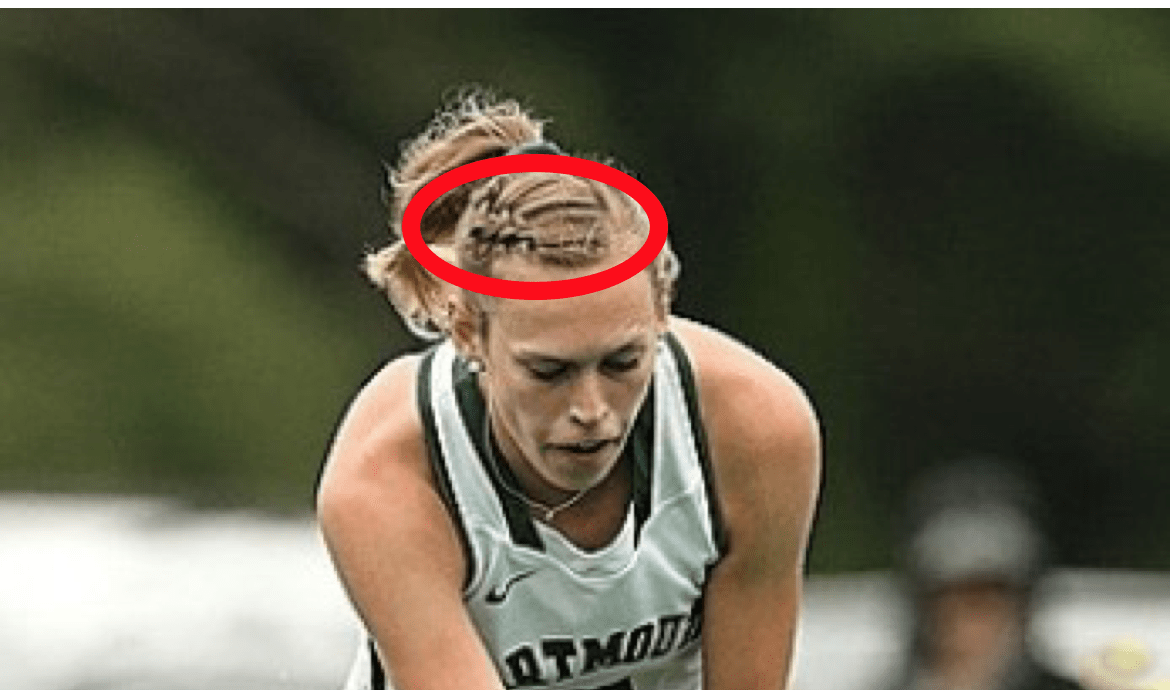
This pre-performance folklore is a form of hair braiding. Katie first began performing this folklore at Lower Dauphin Middle School in Hummelstown, PA, where she began playing field hockey. She was in the 6th grade when she started playing, so she was around the age of 11 or 12. The older girls on the team would braid each other’s hair before each competition and later they taught the younger girls the braiding technique. The technique is not written down or videotaped, it is passed and taught from year to year orally and taught by example. The girls instruct each other and go through the movements together. She does not know who originally started the style, or how long the team had been doing it before she started playing. This hairstyle was special, and was not worn for practices – only games. Katie Spanos learned this technique from an 8th grade girl before their big Division Championship game. Once Katie became older, she passed the techniques down to the new 6th graders to carry on the tradition. Katie continued braiding her hair this way before competitions in high school, and continues to do it to this day in college as a Division 1 Varsity athlete.

Context:

Katie usually performs this folklore in the locker room of the Dartmouth Field Hockey Team. This locker room is located down the street from our field, alongside the Boss Tennis center on 6 Summer Ct, Hanover, NH 03755. Typically, the locker room will be filled with her teammates beginning to prepare for the game. There is usually some type of motivational/exciting music in the background. Katie will begin to braid her hair about 2 hours before a scheduled competition. The team arrives in the locker room and starts to put on their uniform and equipment at this time. She gets dressed and then heads over to the mirror to braid her hair. After she finishes her own hair, she also braids a few of her teammates hair. Katie plans on teaching her special technique to an underclassman so they can continue this tradition. There are a few other girls on the team who have similar traditions and braid their hair in ways that were taught to them by teammates in middle and high school. This could explain how the folklore has multiple existences and variations. It is common that teams share this, but Katie considers her personal version the most special.

Meaning and Interpretation (Informant):

“I think the braiding is special because it is something I have shared with many teammates that I care about and learned many important lessons from. My interpretation is that it is something that bonds teammates together through a shared experience, and a way to improve my performance. I have had teammates do this before I even entered the sport, and I want to pass on the technique so it continues even after I leave. I use it as a chance to calm myself before a competition and do a meticulous and detailed task to focus myself. It might be a superstitious thing… I am not sure. I thinks it holds significance for the entire team because I’m a leader of the team and want to be as focused and prepared for a game as I can be.

Meaning and Interpretation (Collector):

This folklore could be considered a ritual because it is allowing Katie to make a transition from a typical day-to-day state to a pre competition state. She uses the braiding to bring herself and her teammates focus and energy. It is definitely a piece of folklore because it is oral and was taught by word of mouth and example, the technique was not written down to be taught or shared, there is no known author/they are irrelevant, and it is an unofficial part of the Dartmouth field hockey culture. I do think that this folklore could represent a sign superstition, because she never plays a game without doing her braids. The braids are a sign that she will perform well and we will win the game.

One time our bus got caught in a ton of traffic on the way to the game and we knew we would have to put on our uniforms and equipment on the bus without using a locker room when we arrived to the game. Katie put her things on quickly and used the mirror in the cramped bus bathroom to do her own braids. Afterwards, underclassmen made a line in the middle of the bus aisle so Katie could stand above them and finish their braids before arriving to the game as well. It may not be a superstition because she didn’t mention any consequence of not doing it, but it is likely that she would not be as focused before playing or confident stepping on the field without performing this folklore. As for the ritual itself, I believe it reflects Frazer’s Law of Similarity. Katie is focusing herself and preparing herself and her teammates during the ritual. She hopes that this will result in them being maximally prepared and will play with high intensity during the game.

She is an All-Ivy League player and a Captain of the team, so she needs to be at her best at all times because the team relies on her performance. It is also very significant to the other younger girls’ whose hair she braids because she is passing on an important tradition that she learned and wants them to learn. It is bonding them and getting them focused and ready to compete together.

Collector’s Name: Katie Persin

Tags/Keywords:

  • Sports
  • Athletics
  • Field Hockey
  • Pre-Performance Ritual

Tianyu (Ray) Li – Chinese New Year Belief

Chinese New Year Belief (Ray Li)

Title: Chinese ‘Nian’

General Information about Item:

  • Material Folklore: Chinese Supersition – Evil Spirit
  • Language: Chinese (Mandarin)
  • Country of Origin: China
  • Informant: Ray Li
  • Date Collected: May 25, 2019

Informant Data:

  • Ray is a male student at Dartmouth College in the Class of 2020. He was born in Beijing, China and lived there all of his life. He came to the U.S. for school. Currently, he plans to major in Computer Science. Ray travels between New Hampshire and China for major holidays, such as Chinese New Year.

Contextual Data:

  • Cultural Context: In Chinese folklore, the ‘Nian’ was a sea-monster who would rise each year, devouring livestock and any people. People would hide until it was found that the ‘Nian’ was afraid of the color red and loud noises. On Chinese New Year, communities are decorated in red and fireworks are set off, in addition to loud sounds made by playing drums.
  • Social Context: The superstition was relayed through an in-person interview with the informant at Dartmouth College. The Lunar New Year is one of the most important celebrations in China, and the focus is on family. Ray celebrated Chinese New Year with his family when he was in Beijing. However, since it occurs in mid-January, he cannot fly home since he is in school.

Text and Texture

  • Nian

Nian

knee-an

Sea Beast

Zodiac (There is not really an English equivalent for this word.)

  • Fu

foo

Blessing, happiness

Item:

In order to prevent the ‘Nian’ from bringing evil to a family, the family will hang an inverted ‘fu’ on the door. This symbolizes the ‘Nian’ has already been there, so the ‘Nian’ will not come.

Image result for chinese inverted fu

(Source: https://www.tripsavvy.com/what-chinese-characters-on-door-mean-1494980)

Audio File:

Transcript:

A: Alex Leibowitz

R: Ray

A: Okay, so, why don’t you introduce yourself, where from, your year…

R: Okay. So, my name is Ray Li. I’m a ’20 from Beijing, China. Yeah, that’s a little bit about myself.

A: So, yeah, I guess were curious to hear if you have any folklore about evil spirits, evil eyes, that kinda stuff that comes from Chinese culture.

R: Oh for sure. For our Lunar New Year, we have this tradition. We have a monster called ‘Nian,’ which comes here and eats the children and make the village all empty and destroy the harvest for next year and all that stuff. So, to prevent that, we hang this thing called ‘fu,’ which is the Chinese character for, you know, like happiness, prosperity, and all that. And we reverse hang it so we like hang the character but in reverse, like upside down, so it looks like, like nian but in reverse. So when ‘Nian’ arrived, so when we hang it, it means the monster has already arrived so when the Lunar New Year came the monster would not show up. That’s the whole spirit, the whole idea.

A: So is this still something you do today? Is it something that’s very traditional?

R: Yeah, I think it’s the most wide, most ubiquitous thing in China. You see people hang this red picture with the black character with that fu in an upside down manner. It’s still a tradition people still do nowadays.

A: So, what happens, for example, lets say you don’t hang the character upside down?

R: It has a very bad connotation that you have bad luck in the next year.

A: Okay and does this thing have a name? Does this tradition have a name, or…?

R: I think it’s just one of those Lunar New Year traditions, but it’s one of the most important ones. It’s one of the most ubiquitious, most common, and it’s still well perceived, still a tradition that every family have to do.

A: Okay. Awesome. Thank you very much.

Informant’s Comments:

“So when ‘Nian’ arrived, so when we hang it, it means the monster has already arrived so when the Lunar New Year came the monster would not show up.”

Collector’s Comments:

The inversion of ‘fu’ reverses the concept of blessings and happiness, signifying that the family has already incurred the evil spirit of the ‘Nian.’ The material folklore has symbolic significance for the community, where the celebration can occur only if the evil spirit is proteted against.

Collector’s Name: Alex Leibowitz

Tags/Keywords:

  • Material Folklore
  • Chinese Superstition
  • Lunar New Year